

Author: Madeleine Schmuckler
My name is Madeleine, and I am a graduate student at the Centre for European and Eurasian Studies, Munk School, University of Toronto. In my thesis, I am investigating refugees of the Greek Civil War in Hungary, focusing on repatriation attempts made by Civil War refugees from 1949-1980. This focus brought me into contact with MIXED, where I am now conducting a summer internship, funded by the Munk School. Under the supervision of Karolina Lendák-Kabók and Lucija Balikić, I have been working on a MIXED-backed archival investigation into attitudes towards ethnic ‘mixing’ in the interwar period.
My summer internship has been investigating interwar, Hungarian-language periodicals from former Yugoslavia, Czechoslovakia, and Romania, looking at their attitudes towards ‘mixing’ and intermarriage. I have been using a combination of online repositories (through Arcanum), and physical holdings, through the National Széchenyi Library (Országos Széchenyi Könyvtár, OSZK).
Working with physical journals and microfilm, I have investigated Hungarian communities across Yugoslavia and Czechoslovakia, exploring how they saw their role in the newly-created states in which they found themselves. In order to consider the stance of different cultural and social groups, I have used large-scale periodicals, literary supplements, daily newspapers, sports journals, and religious journals. This wide range of publications allows my research to consider a variety of political viewpoints through using sources designed for very different readers, which will allow me to convey a more complete picture on attitudes towards assimilation and intermarriage within this period. Throughout my work, I have been very grateful towards the staff at OSZK, who have helped me navigate the library request submission process, and suggested additional sources to explore.
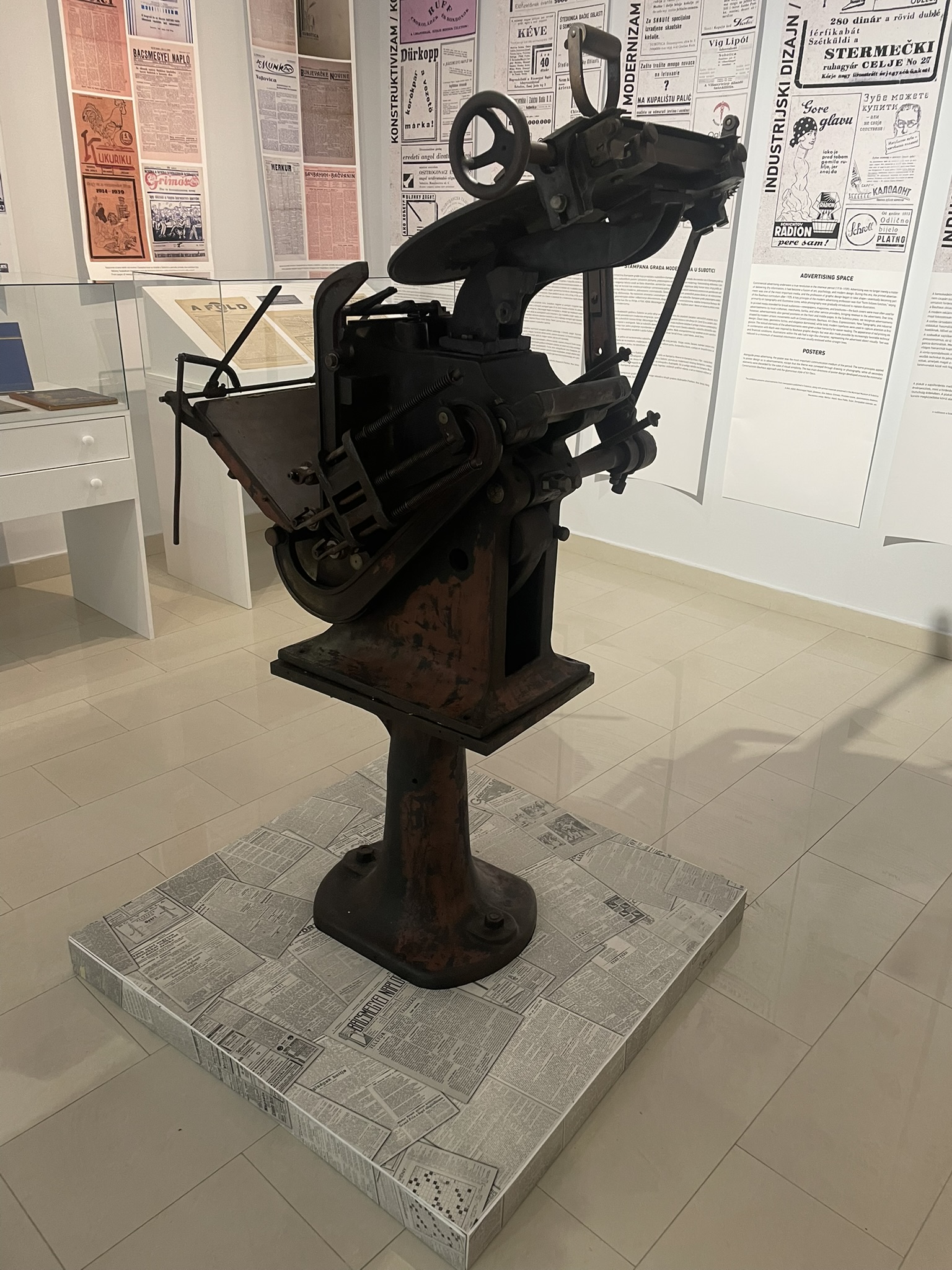
Printing press for papers such as Bácsmegyei Napló, Subotica City Museum
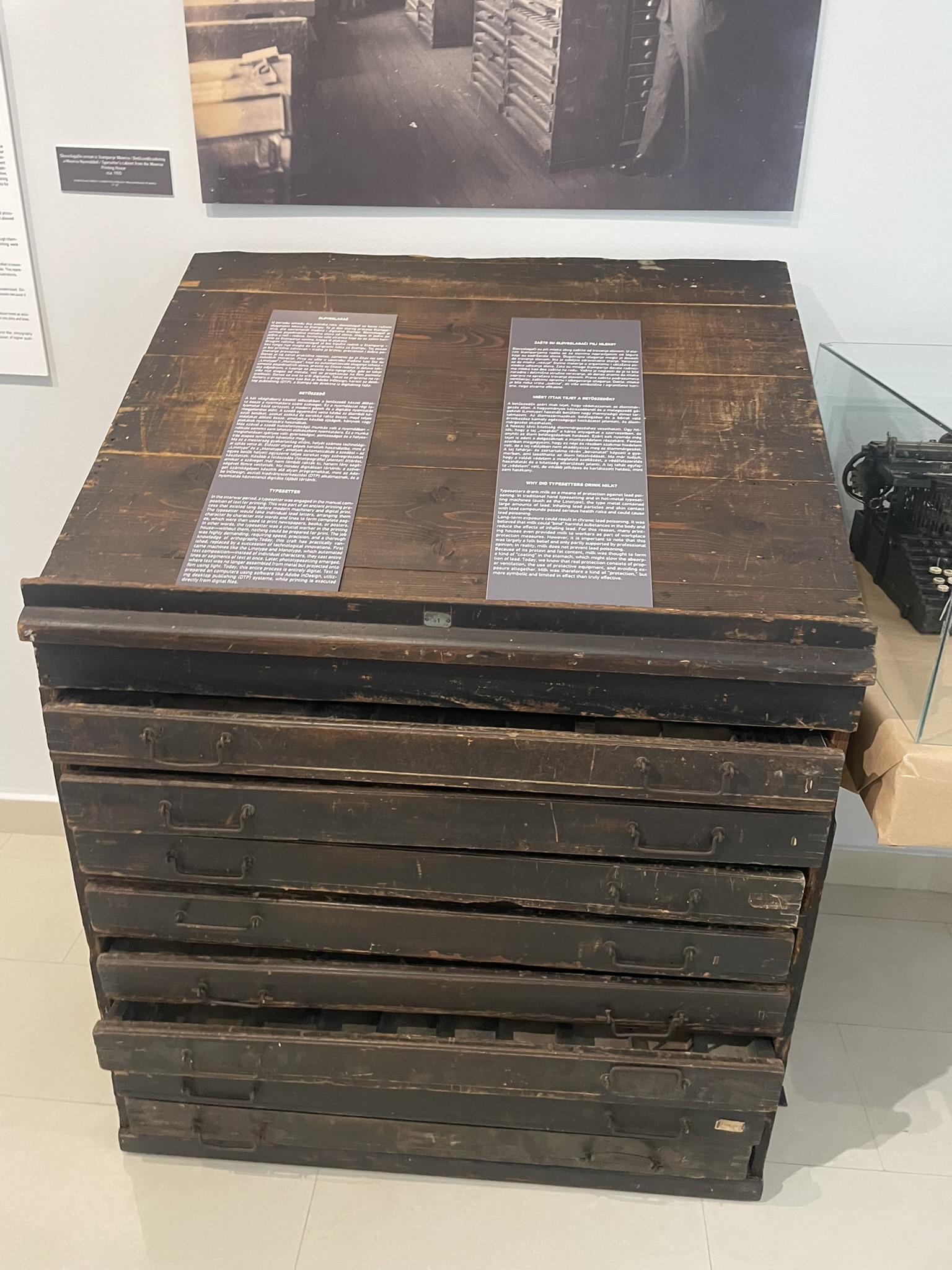
Printing cabinet for papers such as Bácsmegyei Napló, Subotica City Museum
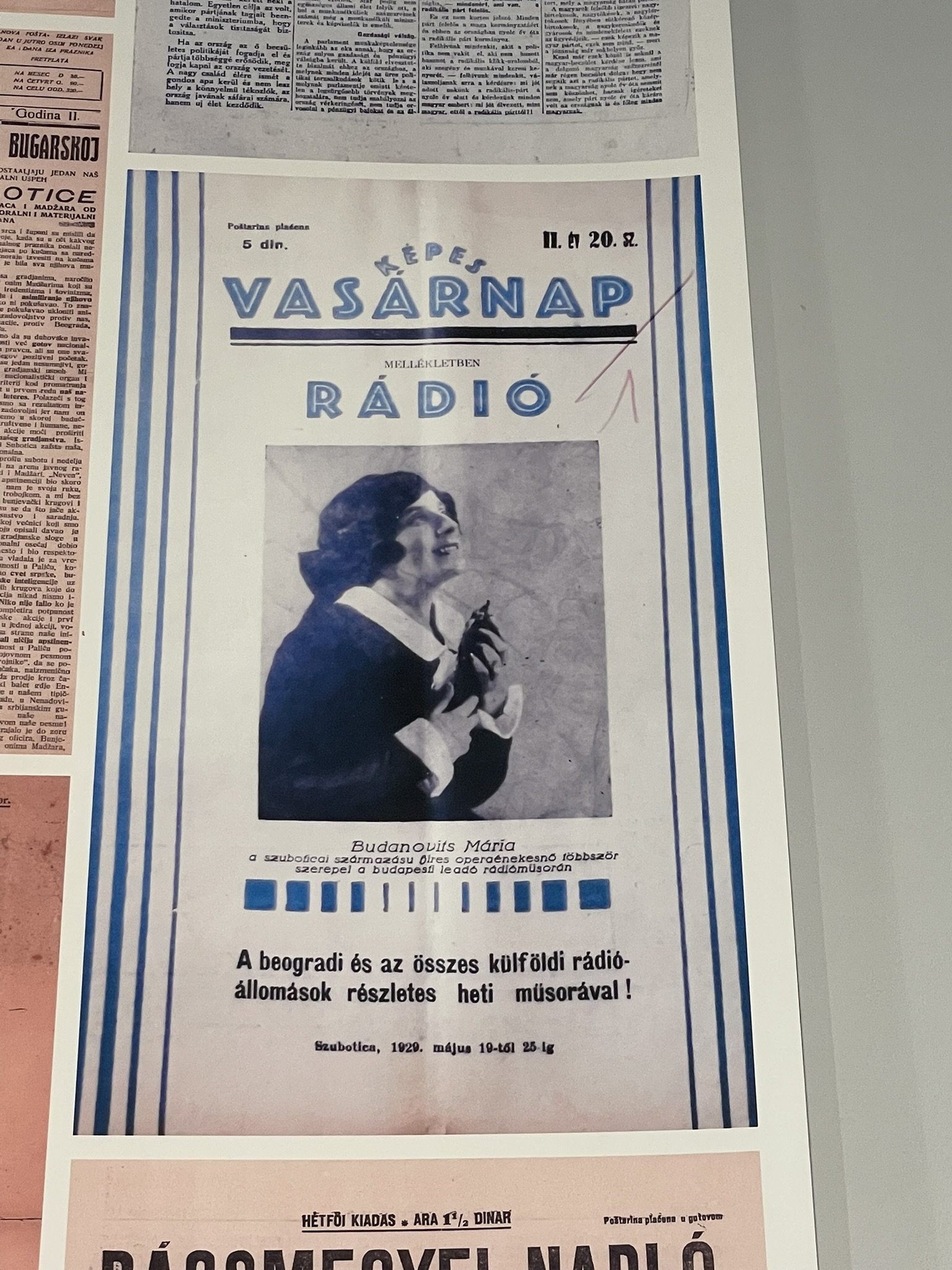
Cover page from Képes Vasárnap, another paper printed in Subotica
My work has also taken me on a brief field trip to Subotica/Szabadka, a hub of interwar Hungarian cultural life. Their fantastic city museum is notable for housing a small collection dedicated to interwar periodicals, as it housed the best printing press within Vojvodina during the interwar period. The space was owned and operated by Ferenc Fenyves, an industrialist and owner of the Bácsmegyei Napló, one of the major periodicals from Subotica at the time. This publication, as well as its literary supplement, Vajdasági Írás, were very important to the Hungarian community of Vojvodina. According to the city museum, Subotica’s printing press was a newer model, and thus rivalled those within the larger population centres of Belgrade and Újvidék/Novi Sad. This resulted in it being a destination of choice for Hungarian authors and journalists in Yugoslavia, who hoped to use the superior equipment, and benefit from the wide readership of journals like Bácsmegyei Napló. Vajdasági Írás included translations of local South Slavic literature to make it accessible to Hungarian audiences, and also provided a platform for writers Dezső Kosztolányi and Frigyes Karinthy to publish some of their works.
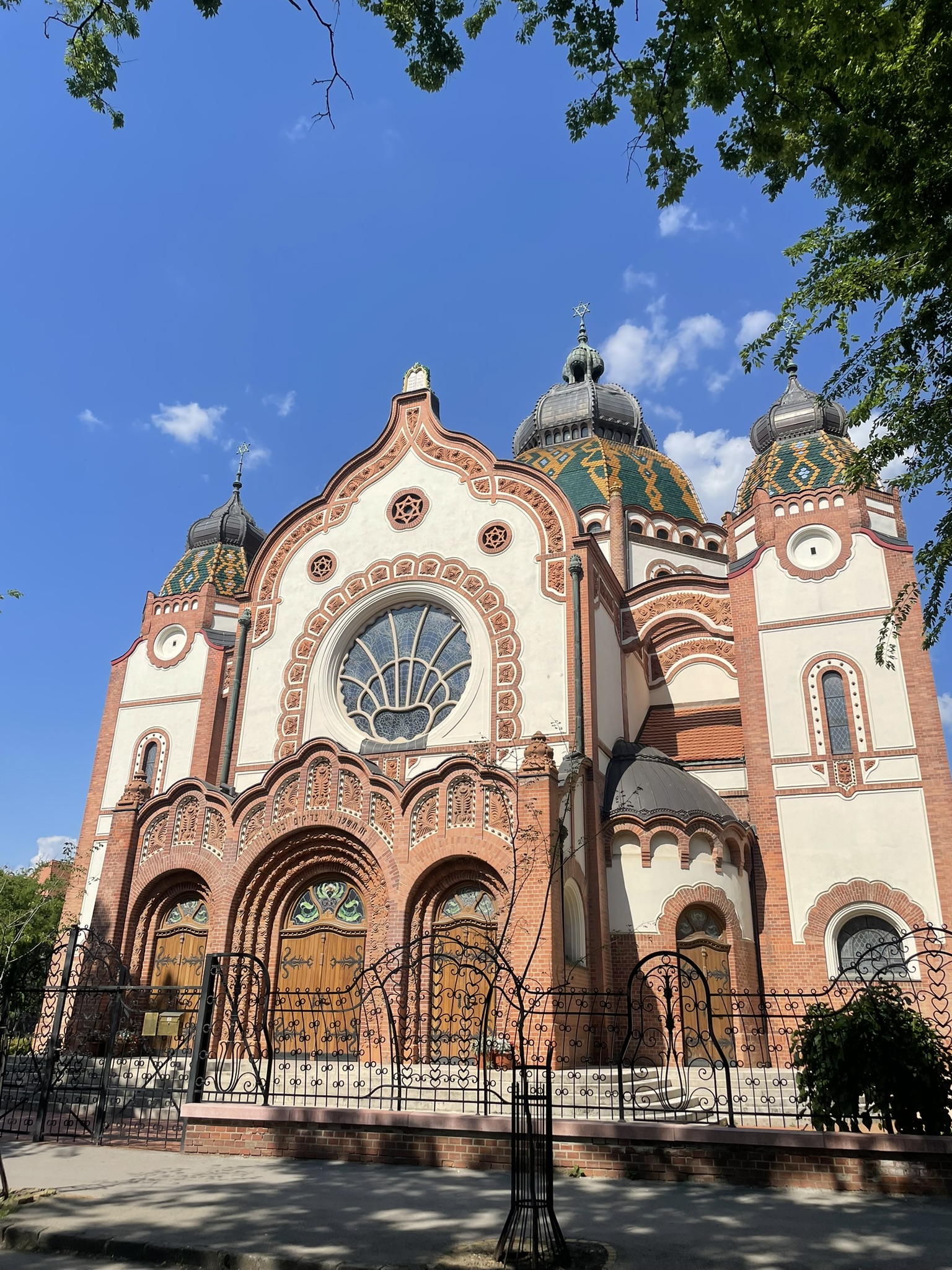
Subotica Synagogue, exterior
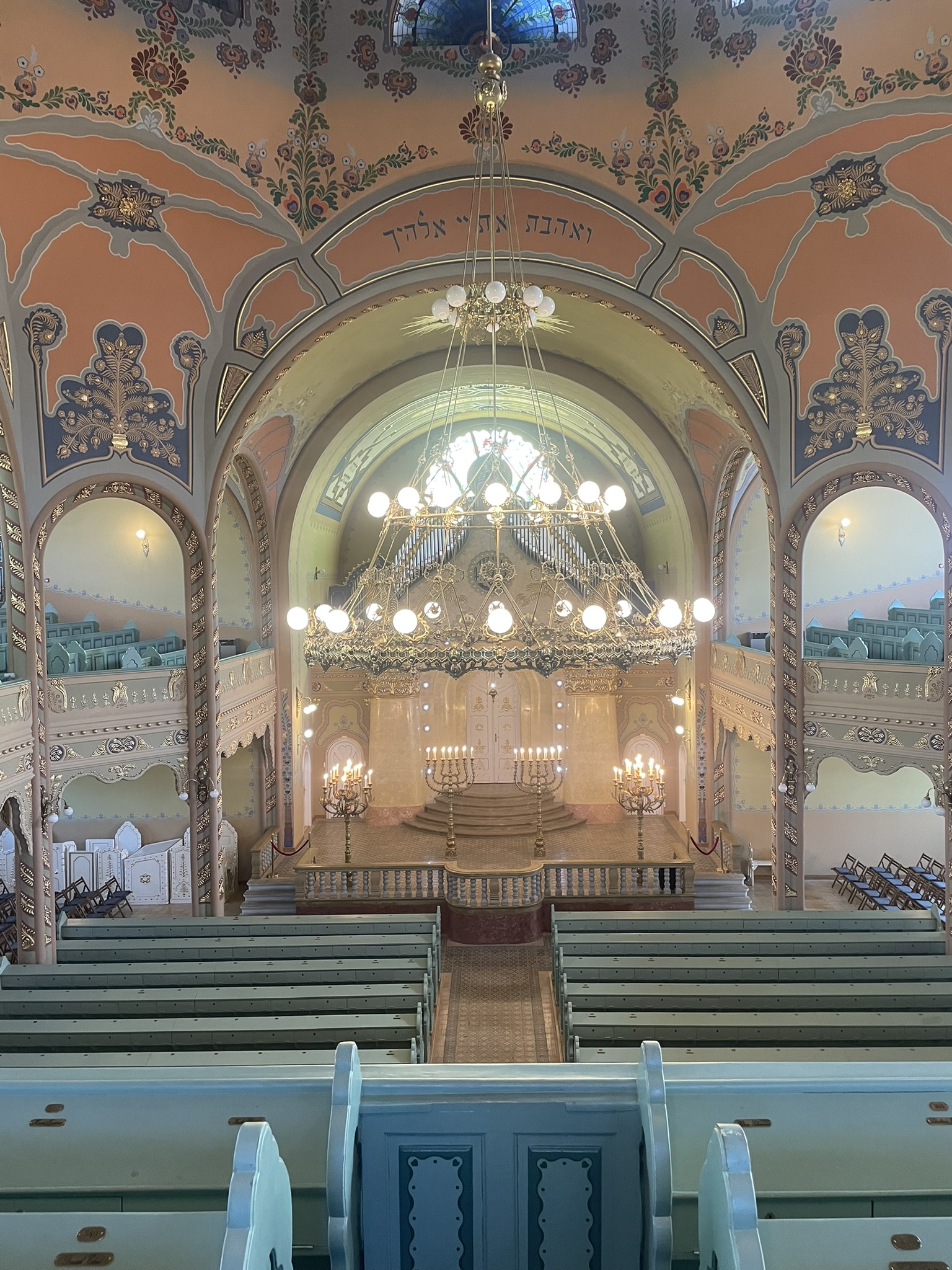
Subotica Synagogue, interior
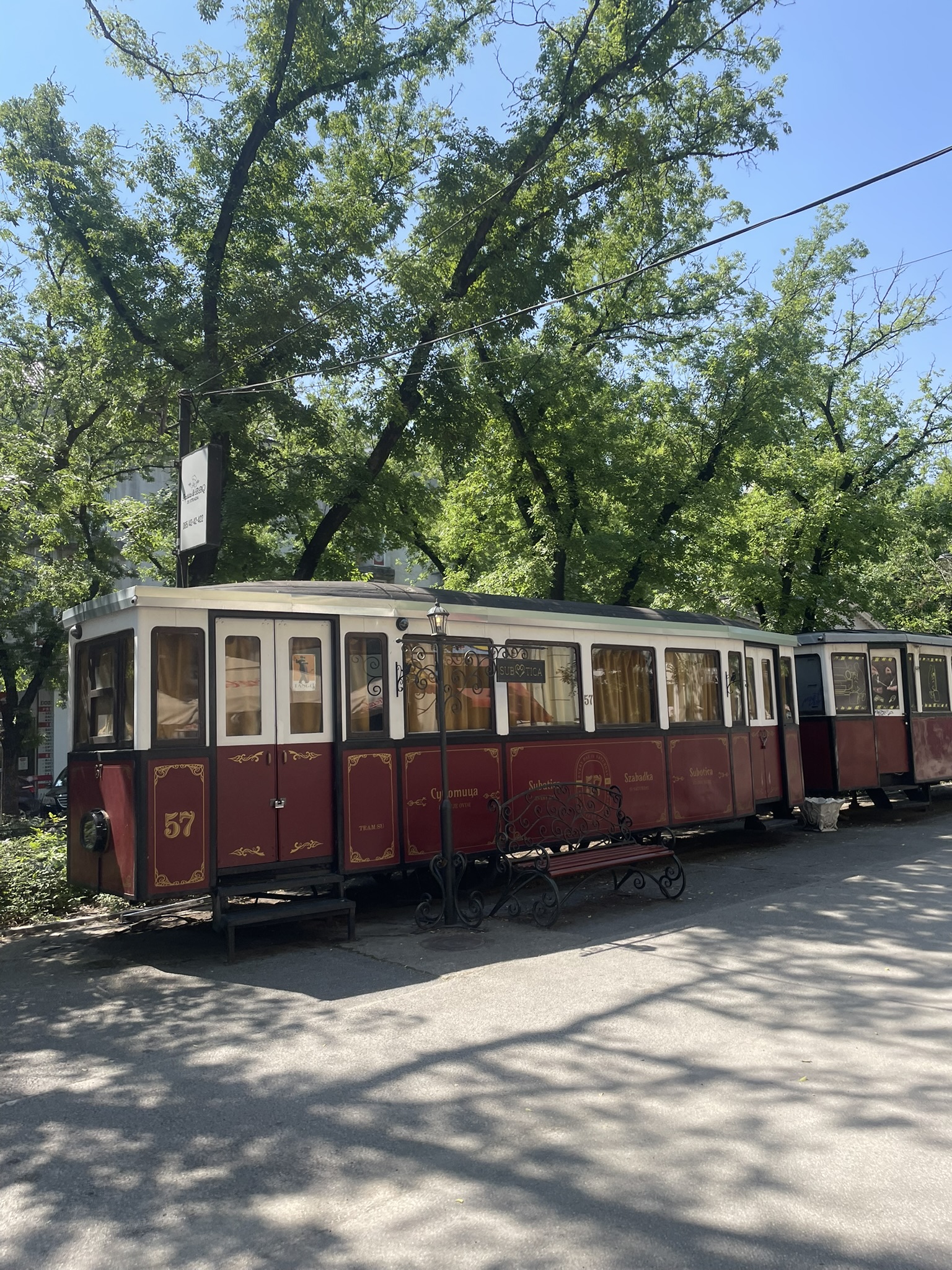
Tram car, Subotica city centre
The Subotica city museum also is a testament to the strength and incredible cultural contributions of the city’s Jewish population. Ferenc Fenyves, and his wife, artist and illustrator Klára Geréb, helped create an intellectual hub not only for Subotica’s Hungarian population, but also its Jewish community. This community, which was decimated by the Holocaust, had an indelible impact on conversations surrounding identity, belonging, and assimilation amongst Hungarians in Yugoslavia. The work of some of its greatest intellectuals were memorialized, both in local museums and their immense cultural output.
My research in Budapest and Subotica will culminate in a co-authored academic publication, demonstrating the complex realities of Hungarian communities in cities like Subotica. These findings hope to add much-needed subtlety to discussions of minority politics in the interwar period and present a wide variety of underutilized historical sources. I am very grateful for the help of archivists, librarians, and my MIXED coworkers throughout this process, and I can’t wait to show you what I have found!
A képek forrása: Madeleine Schmuckler