Academic cooperation between ELTE Faculty of Social Sciences and the International University of Sarajevo (IUS) continued in October 2026 through an Erasmus+ International Credit Mobility (ICM) teaching visit by Laura Kromják and Anna Sebestyén, lecturers at ELTE’s Department of Global and Development Studies. During their visit, they delivered guest lectures to IUS students, sharing their expertise in refugee protection, intergenerational justice and European foreign policy.
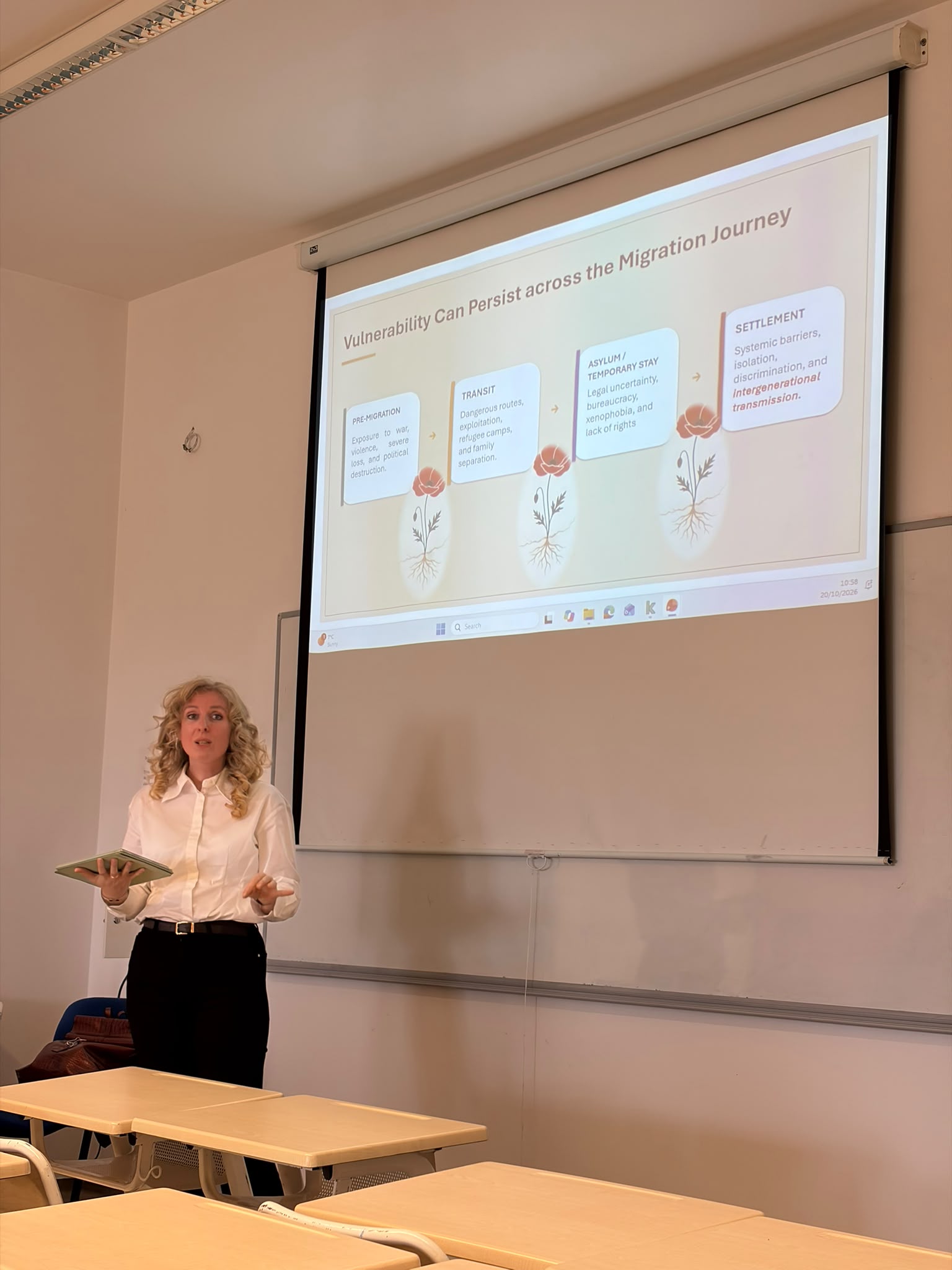
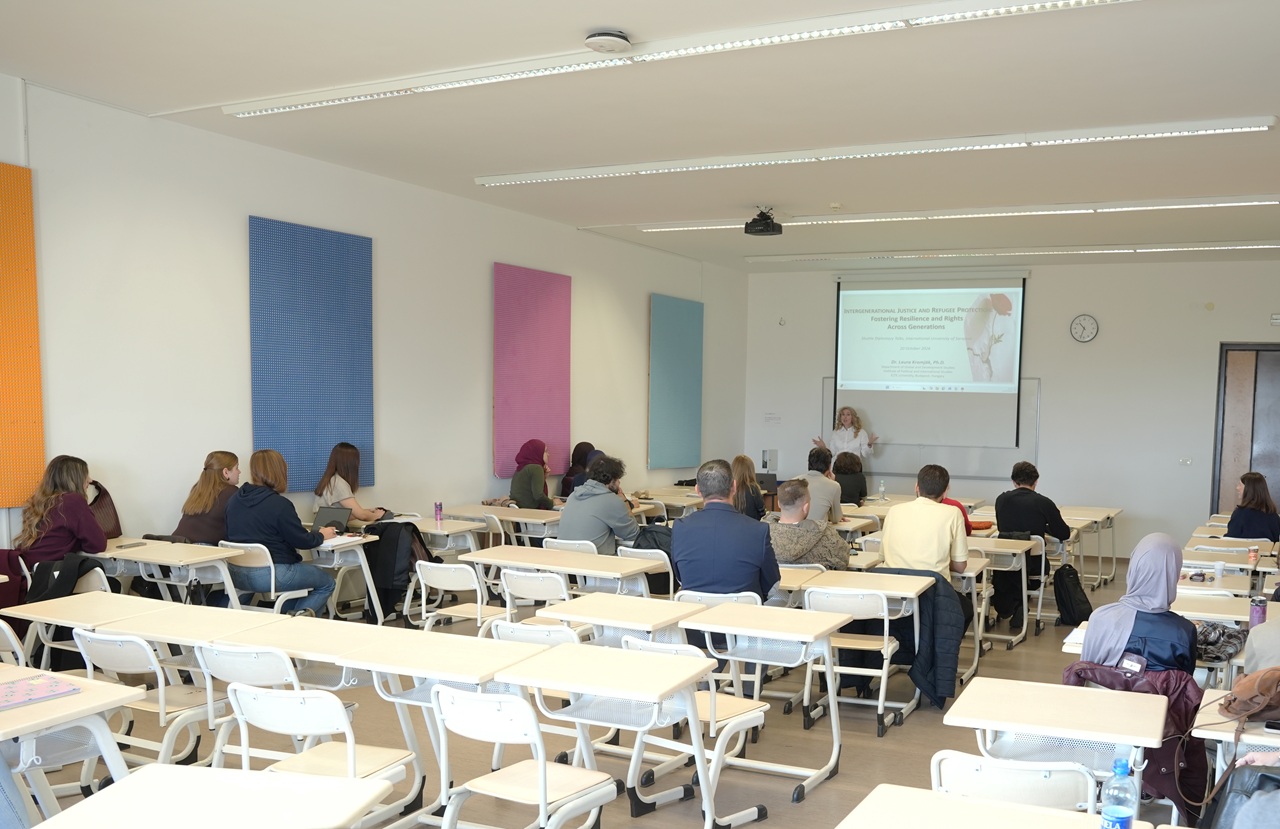
On October 20, Laura Kromják explored refugee protection through the lens of intergenerational justice. Her lecture, Intergenerational Justice and Refugee Protection: Fostering Resilience and Rights Across Generations, drew on her research and co-edited book Intergenerational Trauma in Refugee Communities (Routledge, 2025) to examine how displacement, family memories, and intergenerational trauma influence younger generations’ identities and sense of belonging. At the same time, she foregrounded young people’s resilience and agency, as well as their right to shape their own futures.
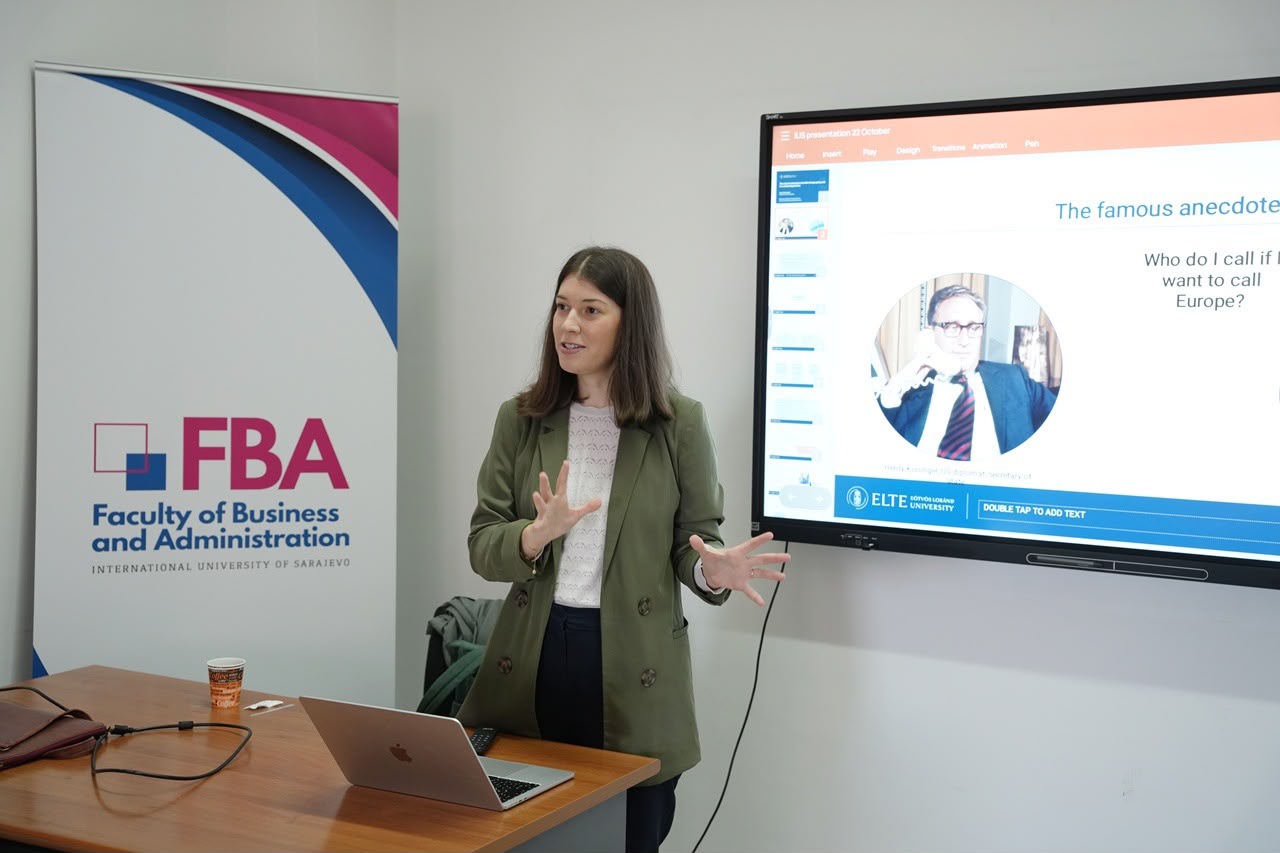
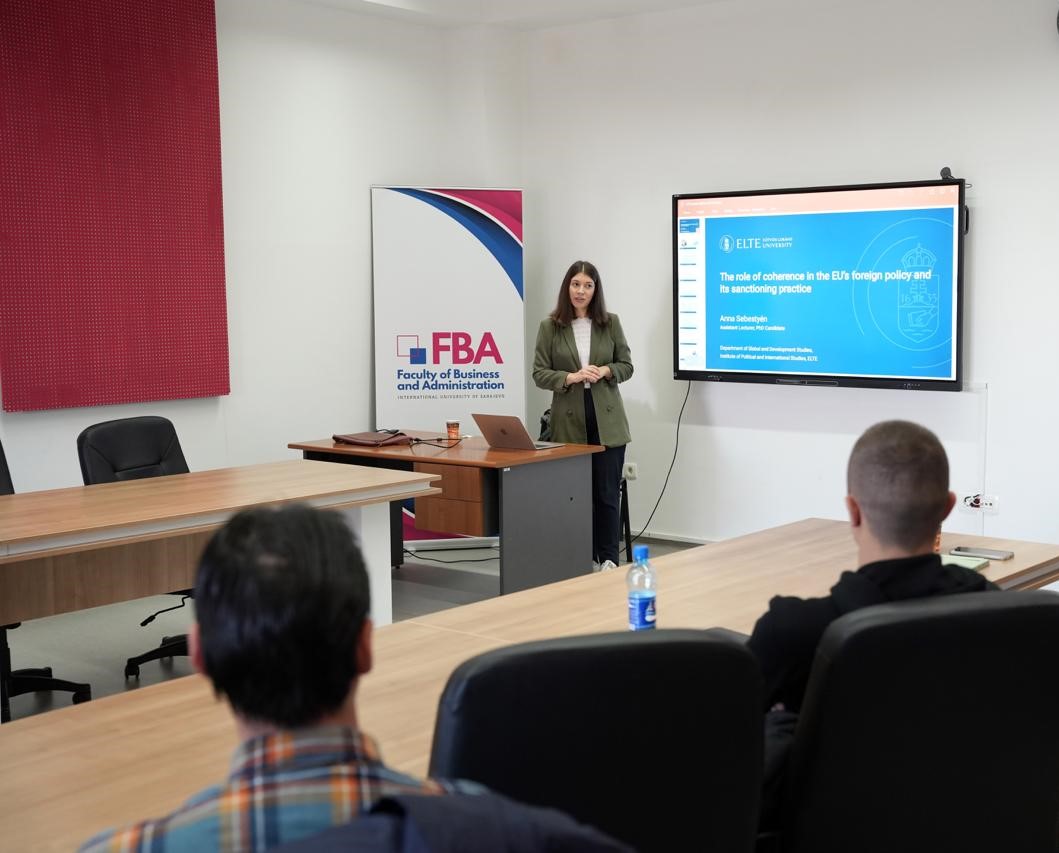
On October 22, Anna Sebestyén brought the discussion into the realm of European foreign policy. Her lecture, The Role of Coherence in the EU’s Foreign Policy and Its Sanctioning Practice, examined the requirement of coherence or consistency which often leads to various types of challenges in the EU. In the field of restrictive measures (sanctions), coherence also has a significant role: if there are contradictions among EU institutions, Member States or policy areas, it might negatively affect the ability of sanctions’ imposition.
The visit offered valuable opportunities for dialogue with students and colleagues, knowledge exchange, and the exploration of future research and teaching collaborations. This academic exchange has further strengthened cooperation between ELTE’s Institute of Political and International Studies and IUS’s Department of Political Science and International Relations, while laying the groundwork for the further development of student mobility opportunities at bachelor’s, master’s and doctoral levels, alongside continued teaching and staff exchanges between the two institutions.
Laura Kromják and Anna Sebestyén in Sarajevo